Fresh Mazafati Dates from Bam: Origin, Cold Chain and Buying Checks
A pack sold as “fresh Mazafati dates from Bam” makes three promises in five words. Mazafati is the variety: dark, very soft and high in moisture. Bam is the town in Kerman province, Iran, where the variety comes from. And “fresh” points to the soft rotab stage, the reason these dates need refrigeration. This page looks at each of those words, then at the checks worth making before you pay. Malaysia has no commercial date growing, so every Mazafati pack sold here is imported.
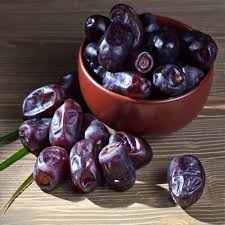
Bam, the town behind the name
UNESCO places Bam on the southern edge of the Iranian high plateau, in Kerman Province in south-eastern Iran, close to the Pakistan border. The town sits 1,060 metres above sea level in a valley with the Kafut Mountains to the north and the Jebal-e Barez Mountains to the south.
Life in the Bam oasis was built on qanats, the underground irrigation channels, and UNESCO says Bam has kept some of the earliest evidence of them in Iran. The protected buffer zone takes in the towns of Bam and Baravat and their palm groves. “Bam and its Cultural Landscape” became a World Heritage site in 2004, a year after the 2003 earthquake, and stayed on the List of World Heritage in Danger until 2013. Wikipedia’s entry for the modern city describes it as known for its dates and citrus fruit, watered by that network of qanats.
In the Malaysian trade the variety also goes by “Rotab Mazafati Bam” and “kurma madu”. All three names point to the same soft, dark date.
What “fresh” means for a Mazafati date
The FAO handbook on date palm cultivation lists five stages of ripening. Whole dates are harvested and sold at three of them: khalal, rutab and tamar. Rutab, which FAO glosses as “meaning wet”, is the soft ripe stage. The tip turns brown or black and softens first, and the fruit loses weight as it gives up moisture over two to four weeks. Tamar is the fully ripe, drier stage after that. We cover the stages in more detail in our guide to what rotab means for Mazafati.
FAO is blunt about the risk. Dates at every stage except tamar are perishable because of their high water content, and rutab fruit, “unless they are cold stored”, will “quickly turn sour and become of no commercial value”. That is why the cold chain gets its own section below.
Then there is timing. Gulf and Middle-East dates are mostly harvested from late summer to autumn, roughly August to November, and new-season stock reaches Malaysia some weeks later. Mazafati, though, is cold-stored and sold year-round, so a soft rotab pack in March is normal and no reason for suspicion.
What researchers have measured on Mazafati
A PubMed search for “mazafati” on 24 November 2026 returned eight papers. All of them deal with growing, residues, packaging or storage. None is a trial of people eating the fruit. Five of the eight touch on what a buyer of fresh fruit might care about:
| Paper | Where the fruit came from | What it found |
|---|---|---|
| Rohani and colleagues, 2024 | Fresh Mazafati from Bam City, Kerman Province | 47 pesticides tested in 12 fruit samples. Only diazinon turned up in the fruit, at a mean of 0.037 mg/kg, and most samples were below Iran’s 0.05 mg/kg limit for dates. |
| Hosseinpour and colleagues, 2026 | Mazafati peel and flesh, lab study | Washing with water cut residues of non-systemic pesticides on the peel, most for chlorpyrifos, then diazinon, then fenitrothion. |
| Azimi and colleagues, 2025 | 10-year-old Mazafati palms in an orchard near Jiroft, Kerman Province | Bunch drying and wilting shows up between the kharak (khalal) and rutab stages, at the time of hot, dry winds. A coating on the bunch tail cut it by 35% and 88% at two strengths. |
| Alikhani-Koupaei and Khosravinejad, 2025 | Mazafati palms with three leaf-to-bunch ratios | The highest ratio gave the highest soluble-solids-to-acidity ratio and firmness at harvest, but lost more than 10% of its weight after 60 days in storage. The middle ratio lost at most 3.61%. |
| Mousavi and colleagues, 2015 | Mazafati packed in nano-silver films, Kerman | The longest shelf life was 53 days, in film with 5% nano-silver by weight, and 4°C was the best of the four storage temperatures tried. |
The Bam paper is the one closest to the phrase on the label. Its authors also ran a dietary intake assessment and found no health risk from the pesticides they measured in fresh fruit. The nano-silver film is a lab packaging test, not something you will find on a shop shelf, and its best result came at 4°C, one of the four temperatures tested.
The cold chain from Bam to a Malaysian shelf
FAO’s chapter on harvesting and packing has a short passage on shipping that reads almost like a buyer’s checklist. Fruit is sometimes stored for months before it ships, so every consignment should be sampled to make sure the quality has not changed. Labels and markings have to be checked against the law and the customer’s requirements in the importing country.
Then comes the temperature recorder. FAO says that because temperature matters so much, “especially for fresh dates at Khalal or Rutab stage”, a recorder must be placed in the container, the truck or on the surface. It logs the temperature through the trip, and the customer signs for the shipment only if the readings meet the terms agreed with the carrier.
You will not see that ribbon of readings at a shop counter. What you can see is the last link: Mazafati needs refrigeration, so the pack should be in a chiller when you buy it.
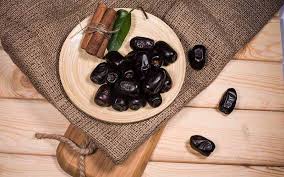
Fresh Mazafati dates from Bam: checks before you buy
None of these needs special tools. They come from the FAO lines above and from what is printed on the pack.
- Read the label. FAO notes that in most importing countries the law requires weight, country of origin, quality and expiry date on the package. A pack missing those is a pack to put back.
- Look for the variety or the town in the name. “Mazafati”, “Bam” or “kurma madu” should appear somewhere, since “rotab” alone names a ripeness stage, not a variety.
- Check where the pack is kept. Mazafati needs refrigeration, so it should come out of a chiller, not off a warm shelf.
- Treat the grade as the seller’s own. A, AA, AAA and Jumbo are each importer’s size sorting, not an international standard, so compare grades within one seller’s range.
- For a larger Mazafati order, ask the seller how the stock has been kept cold since it arrived, and when it was packed.
At home, put the dates straight into the fridge. Mazafati needs refrigeration in your kitchen as much as in the shop.
Rotab prices on one Malaysian list
On 24 November 2026 I checked one Malaysian wholesaler’s price list. It had three rotab listings in 12 × 600 g packs, plus one 3kg rotab pack of a different variety:
| Listing (as named) | Price | Regular price | Weight | Per kg | Stock |
|---|---|---|---|---|---|
| Rotab Mazafati AAA 12pkt * 600gm | RM86 | RM135 | 7.2kg | RM11.94 | Out of stock |
| Rotab BAM AAA 12pkt * 600g | RM88 | RM90 | 7.2kg | RM12.22 | Out of stock |
| Rotab 12pkt * 600g | RM90 | RM120 | 7.2kg | RM12.50 | Out of stock |
| Rotab Sukkary Premium – 3kg | RM63 | RM120 | 3kg | RM21 | In stock |
Only the first listing names Mazafati, and the second names Bam. The third gives no variety at all. All three 12 × 600 g packs were out of stock that day. Mazafati is cold-stored and sold year-round, so an empty listing is a question about one seller’s stock on one date. The only rotab listing in stock was Rotab Sukkary. Sukkary is another spelling of Sukari, a variety from Al-Qassim in Saudi Arabia that is golden-amber and very sweet, so it is a different date altogether. For a closer look at these figures, see our rotab pack prices and per-kilo figures.
If you are weighing Mazafati against semi-dry Iranian dates, one Rabbi dates price breakdown sets the same rotab packs beside Mariami prices from that list and shows how to turn a quote into a per-kilo figure.
Quick answers
Is “kurma madu” the same as Mazafati?
Yes. In the Malaysian trade, “kurma madu” and “Rotab Mazafati Bam” are both names for Mazafati.
Are fresh Mazafati dates from Bam sold outside the harvest months?
Yes. Mazafati is cold-stored and sold year-round, so finding soft rotab in any month is normal.
Is Rotab Sukkary a kind of Mazafati?
No. Sukari comes from Al-Qassim in Saudi Arabia and is golden-amber. Mazafati comes from Bam in Iran and is dark. Both can be sold soft, which is why both carry the word rotab.
Does washing the dates help?
In the 2026 lab study above, washing Mazafati with water lowered non-systemic pesticide residues on the peel. The washing result was reported for the peel.
Before your next order
Buying fresh Mazafati dates from Bam comes down to three things you can check: a full label, the word Mazafati or Bam on it, and a cold shelf. Older posts on this variety are filed under Kurma Rotab, and the newest are on the blog page. More about this site is on the About Us page.